• About Me
  • Books
  • Articles
  • Inspire
  • Downloadables
    • Connect
    • Conversations
    • Journals for Consideration
Menu

Designed To Learn

Street Address
City, State, Zip
Phone Number
Learning informed by cognitive science, driven by design

Your Custom Text Here

Designed To Learn

  • About Me
  • Books
  • Articles
  • Inspire
  • Downloadables
  • Connect
    • Connect
    • Conversations
    • Journals for Consideration

How Continuous Feedback Fosters Learning

November 12, 2019 Lindsay Portnoy
Screen Shot 2019-11-12 at 1.29.36 PM.png

Whether it is solving a story problem or writing an essay on child development, every piece of work in the classroom is done intentionally, most often towards a specific learning goal. Providing feedback effectively ensures that students are clear about the learning goals they are working towards while modeling how they can apply feedback before, during, and after they complete their work. By creating a culture of growth and learning, feedback becomes part of a process of continuous growth and progress instead of a means to an end.

Read more here: http://www.gettingsmart.com/2018/02/how-continuous-feedback-fosters-learning/

How SAMR and Tech Can Help Teachers Truly Transform Assessment

November 12, 2019 Lindsay Portnoy
Screen Shot 2019-11-12 at 1.27.26 PM.png

I read an interesting article in EdSurge last week about how current educational technologies do little to move learners beyond rote recall of knowledge and it caught me off guard. It was not the belief that technology has yet to be harnessed to its highest potential that surprised me. It is true that many fields are only starting to see the benefits technology brings to their work. What struck me most was the narrative in the article, which seemingly compared the role of technology to the role of pedagogy. While educational technology does make learning visible, it is the teacher that makes learning meaningful.

Read more here:

Portnoy, L. (2018, February). How SAMR and Tech Can Help Teachers Truly Transform Assessment. EdSurge. Retrieved from https://www.edsurge.com/news/2018-02-01-how-samr-and-tech-can-help-teachers-truly-transform-assessment

Tags SAMR, formative assessment, technology as a tool, transforming assessment

Level up your classroom assessments: Are you game?

November 12, 2019 Lindsay Portnoy

Simulations, genius hours, and project-based learning have seen a dramatic rise in classrooms nationwide as educators aim to inspire and prepare a new generation of students. Yet, even as pedagogy shifts toward innovation and engagement, the metrics by which students are assessed are still largely predicated on the rote recall that characterized last century's assessments.

Assessment practices must transform to be meaningful to both students and educators. Meaningful metrics reveal new information to students and teachers: what went well, areas for improvement, and next steps for teaching and learning. What's more, assessments are most effective if they excite and engage our students toward continued growth. Formative assessment delivered through game-based learning can meet all these criteria.

Read more here:

Portnoy, L. (2018, February). Level up your classroom assessments: Are you game? ASCD Express, 3 (12). Retrieved from http://www.ascd.org/ascd-express/vol13/1312-portnoy.aspx

Screen Shot 2019-11-12 at 1.26.58 PM.png
Tags formative assessment, transforming assessment, playful learning, games for learning

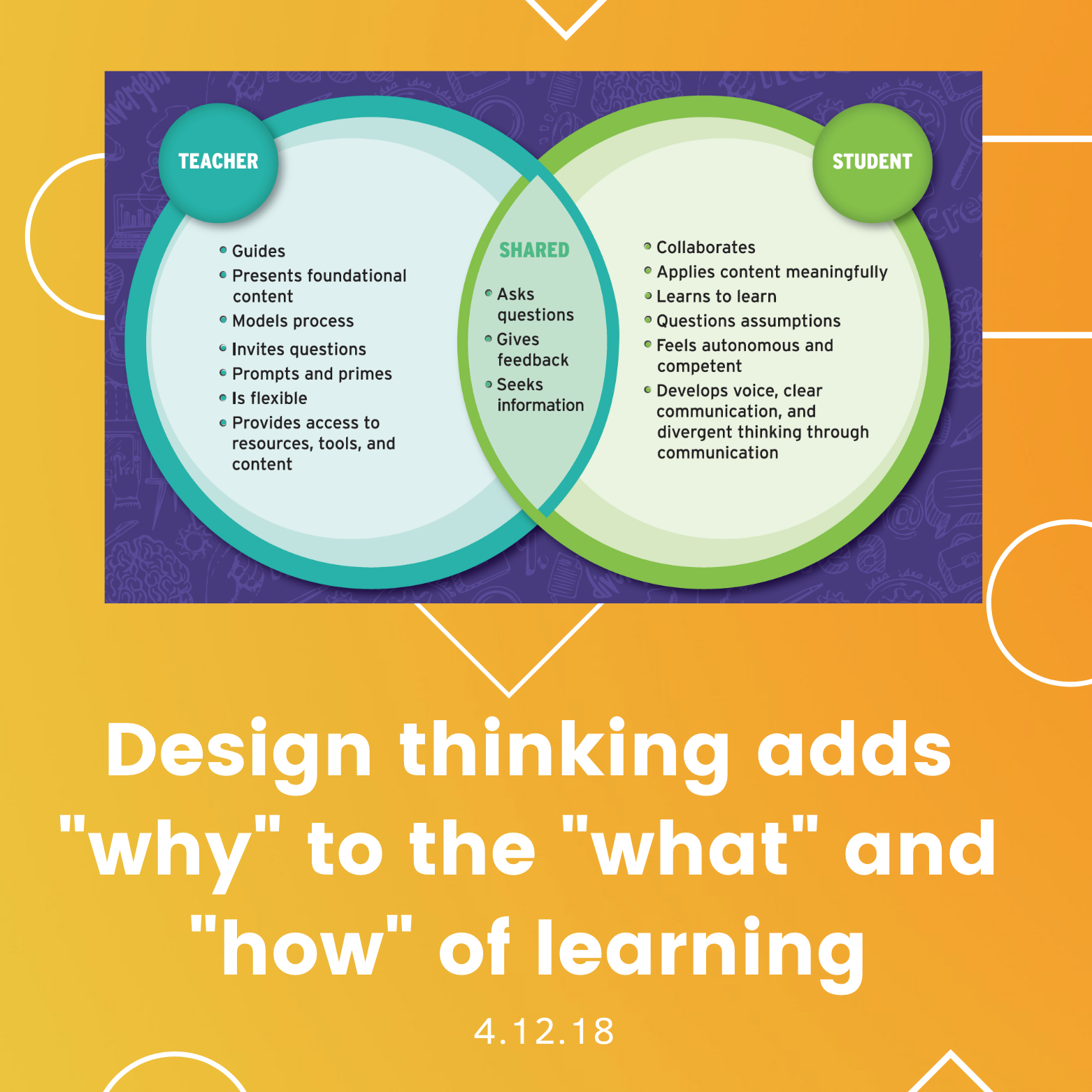
Design thinking adds "why" to the "what" and "how" of learning

November 12, 2019 Lindsay Portnoy

By the time our current 4th graders enter the workforce in the year 2026, more than 1.4 million U.S. jobs will be disrupted (changed or eliminated) by technology (World Economic Forum, 2018). At that same time, however, 48 new types of career opportunities will have been created. What is more, children today can expect to have more career changes than any previous generation. To prepare our youngest citizens for an exciting and uncertain future, schools must build skills such as creative thinking, problem solving, perseverance, and effective communication. Teaching our children to think like designers can foster this type of thinking.

From its origins in an engineering classroom several decades ago (Atman & Bursic, 1996), design thinking can be applied across the curriculum and with learners from preK to higher education. The only requirement is an open, curious mind and a desire to innovate. Plattner's (2010) model for design thinking (see Figure 1) provides an ideal canvas for learners to develop a sense of agency in their learning, and autonomy in their ability to innovate and iterate on problems that are most meaningful to their lives. The five, iterative stages of this model—empathize, define, ideate, prototype, and test—integrate "soft skills" like communication, collaboration, problem solving, and perspective-taking with the "hard skills" taught across the curriculum. Moreover, this model for design thinking engages students in the three-dimensional thinking presented in the Next Generation Science Standards (2013) framework, including domain-specific content (disciplinary core ideas), interdisciplinary connections (cross-cutting concepts), and skills and practices of successful problem solvers (science and engineering practices).

Read more here:

Portnoy, L. (2018, April). Design thinking adds "why" to the "what" and "how" of learning. ASCD Express, 3(14). Retrieved from http://www.ascd.org/ascd-express/vol13/1315-portnoy.aspx

Screen Shot 2019-11-12 at 1.25.09 PM.png
Tags designed to learn, design thinking, future of work, future of learning

Using Games to Support STEM Curiosity, Identify, and Self-Efficacy

November 12, 2019 Lindsay Portnoy
Screen Shot 2019-11-12 at 1.19.43 PM.png

Portnoy, L., & Schrier, K. (2019) Using Games to Support STEM Curiosity, Identify, and Self-Efficacy. The Journal of Games, Society, and Self. 1(1), 66-96. Retrieved from https://kilthub.cmu.edu/articles/Journal_of_Games_Self_Society_Issue_1/7857578

Tags STEM, formative assessment, playful learning, games for learning, SEL

Design thinking: Bridging learning and real-world application

November 12, 2019 Lindsay Portnoy

A recent study from PwC found that 91 percent of CEOs are concerned that employees lack the soft skills necessary to meet the needs of an evolving economy.

With automation transforming the role of employee from rote worker to innovator and problem solver, the 4 Cs–critical thinking, creativity, collaboration, and communication–are more powerful than ever.

While companies tailor learning experiences to upskill employees through badging or micro-credentialing, global educators are turning to flexible, but intentional elements of design thinking to guide students in purposely applying foundational knowledge today as they design novel solutions to the problems of tomorrow.

5 key elements

The five essential elements of design thinking include:

  1. Understanding through empathy

  2. Identifying and researching problems

  3. Communicating to ideate potential solutions

  4. Designing and testing solutions

  5. Reflecting and iterating on solutions

Read the full article here:

Portnoy, L. (2019, June, 12). Design thinking: Bridging learning and real-world application. K12 Insight. Retrieved from https://www.k12insight.com/trusted/design-thinking-bridging-learning-and-real-world-application/

Tags designed to learn, design thinking, future of work, future of learning, situated cognition, K12 Insight

Design Thinking in Curriculum Design: A Talk With Education Talk Radio

November 12, 2019 Lindsay Portnoy
Screen Shot 2019-11-12 at 1.15.08 PM.png

AN ASCD SHOW DESIGN THINKING IN  CURRICULUM DESIGN : Author of "Designed to Learn: using Design Thinking to Bring Purpose and Passion to the Classroom, Dr. Lindsay Portnoy is our guest

Listen in here: https://www.blogtalkradio.com/edutalk/2019/10/01/an-ascd-show--design-thinking-in-curriculum-design

Tags designed to learn, design thinking, Education Talk Radio

Demystifying Learning So We Are Designed To Learn

November 12, 2019 Lindsay Portnoy

Lindsay writes and researches about learning science in articles in peer-review journals to widely read publications such as EdSurge and Getting Smart, to ASCD and Digital Culturist. Her new book, Designed to Learn is available now for pre-order.

What it was like when you were a student

I had a very traditional experience with school. I didn’t feel like I was a ‘good’ student until I was in high school and sometimes I wonder if even that was by accident. I remember taking a test in high school telling me what types of careers I should pursue and thinking “wow, I don’t want to do any of those things but I guess I’m not able to do anything else.”

I think it’s really an interesting juxtaposition that in a time where so much money is being spent on initiatives to foster ‘growth mindset’ the grown-ups in the room are still following the entity perspective of ‘this is what type of learner you are and this is what your ability is’. We’re still looking to standardized tests to determine what people are capable of accomplishing and not allowing people to pursue what they care about and supporting them along the way. We ask our kids to be resilient but we don’t model it very well. Especially in a school system that is predicated on bells and exams and multiple barriers to entry from college to career. It seems a bit silly to me.

Read more & listen in here: https://barbarabray.net/2019/09/22/episode-83-demystifying-learning-so-we-are-designed-to-learn-with-dr-lindsay-portnoy/

Tags designed to learn, design thinking, student empowerment, cognitive science, games for learning, transforming assessment, Barbara Bray

How can cognitive science inform the future of education?

November 12, 2019 Lindsay Portnoy
Screen Shot 2019-11-12 at 1.12.09 PM.png

How can cognitive science inform the future of education?

  • The education field has a wealth of cognitive science research that reveals how people learn, yet the applied practice happening is schools shows an enormous disconnect.

  • Things like school bells, siloed 'one-hour-one-subject' classes, traditional grades, and standardized testing are outdated design features of the education system.

  • Equitably educating all learners across diverse populations to help them be as successful as possible will require education innovators to put cognitive science to work in the field, and to re-educate policymakers on what school could look like.

Listen in/watch here: https://bigthink.com/yes-every-kid/how-can-cognitive-science-inform-the-future-of-education

Tags Big Think, cognitive science, designed to learn, design thinking, metacognition, self-regulated learning, epistemology

Design Thinking: Problem of Practice to Opportunity to Innovate

October 14, 2019 Lindsay Portnoy
Designing Solutions to Tomorrow’s Problems Today

Designing Solutions to Tomorrow’s Problems Today

Preparing our youngest citizens to be critical thinkers and creative problem solvers requires a combination of hard and soft skills inherent within the design thinking framework. Blending complex content communication, problem solving, and collaboration, design thinking invites learners to take the perspective of others and develop empathy to guide students in solving real problems in their lives today along with the uncertain problems in their futures.

Design thinking is simply good pedagogy. Read more here and here.

Tags problem of practice, opportunity for innovation, design thinking, designed to learn
← Newer Posts Older Posts →